Wales
The DecameronIn the Count of Antwerp’s story, Wales becomes the place where Perrot’s fortunes reverse: the boy who arrives as the son of a poor, wandering father grows into a renowned fighter and ultimately inherits a great household. Its role is defined by the contrast between the family’s displacement and the position Perrot gains there.
Arrival and Setting
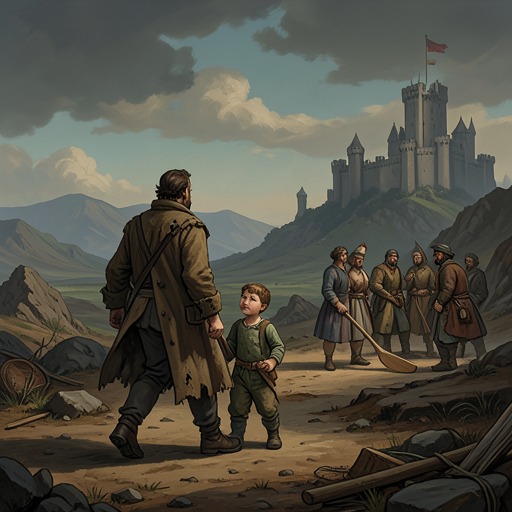
After entrusting his daughter Violante to a noblewoman in London, the Count of Antwerp travels on foot with his son Perrot and reaches Wales. There, a marshal of the King of England maintains a court with a numerous household. The count and his son come there from time to time seeking food, dependent on charity and hospitality rather than holding any recognized place in the marshal’s service.
The marshal’s sons and other young gentlemen spend their time in boyish exercises, including running and leaping. Perrot joins them and performs each feat with exceptional dexterity. The marshal notices the boy’s abilities and asks who he is; he is told only that Perrot is the son of a poor man who sometimes comes to the court for alms. The encounter changes the family’s immediate circumstances: at the marshal’s request, the count gives Perrot into his care, though the separation grieves him.
Perrot’s Rise
In the marshal’s household, Perrot grows in favor with his lord. He develops into a handsome and capable young man, distinguished in tournaments, jousts, and other feats of arms. His reputation spreads throughout the island under the name Perrot the Picard. The name preserves his association with the displaced family even as his standing in Wales is made by his own prowess.
Perrot’s advancement depends not only on his martial ability but also on the survival of the marshal’s house. A pestilential sickness devastates the region: nearly half the population dies, while many survivors flee to other lands. The marshal, his wife, their only son, and numerous relatives all perish. Of the household, only a daughter of marriageable age, Perrot, and several other servants remain.
Inheritance and Consequences
After the pestilence abates, a small number of surviving gentlemen of the country counsel the marshal’s daughter. She takes Perrot as her husband because he is a man of worth and prowess, and makes him lord of the inheritance that has fallen to her. His position changes from a dependent boy received into another man’s household to the husband and lord of its surviving heiress.
The King of England hears of the marshal’s death and recognizes Perrot’s worth by appointing him to the vacant office of marshal. Wales thus provides the setting for a sharp reversal in the Count of Antwerp’s family story: the children he had left behind in hardship are no longer merely lost dependents. Perrot’s rise is presented alongside the fortunes of his sister Violante, and both outcomes answer the father’s belief that his children had been left for lost.